How to Make Kachumbali

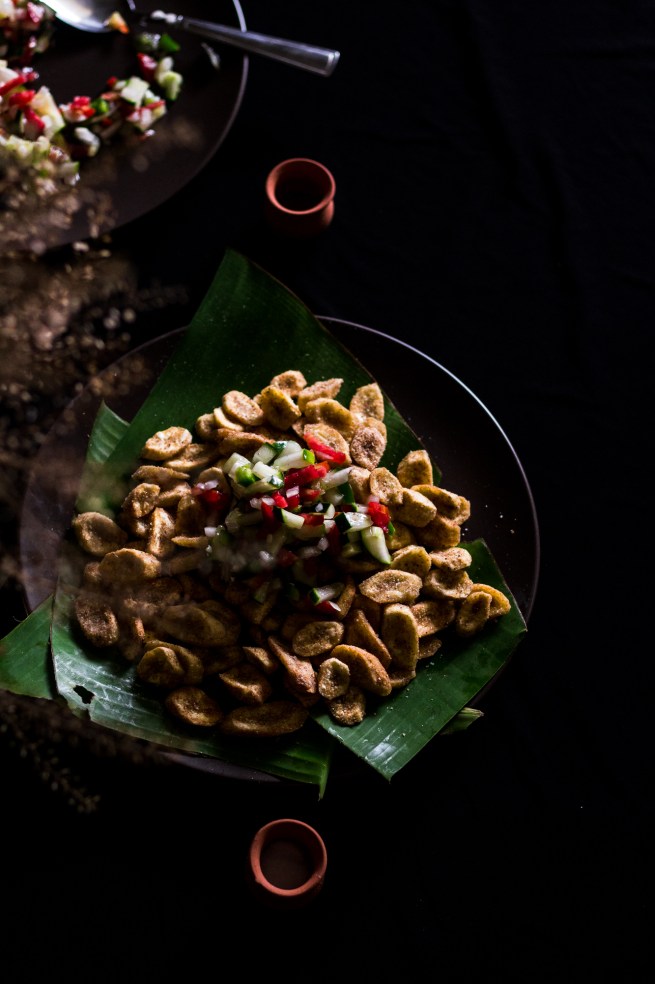
It always fascinates me how the world is so interconnected in so many ways. You will almost find a variation of a certain food in each region. Kachumbali which is an east African staple has roots in India and the south America with just a few modifications. I personally love kachumbali because it is easy to put together and it adds a refreshing flavor and texture to any meal you eat it with. The spiciness of the raw onion coupled with the freshness of raw tomatoes and a sprinkle of lemon/lime juice for a sour punch is just all you need to elevate your meal. Today I am sharing with you my version of kachumbali because I really enjoy making it and adding other delicious elements like mangoes and cucumbers. Now Imagine with me if you will, the cooling refreshing sensation that comes with biting into a cucumber, the sweet slightly tart juicy tomato and the prickly spiciness of raw onion coming together with a touch of lemon juice, salt and mild heat from black pepper into a bowl of deliciousness. The ultimate game changer to any meal. You think your posho and beans are bland, add a tablespoon of kachumbali and all of a sudden flavor is enhanced! You cannot handle the heat in your chicken curry, add a tablespoon of kachumbali to cool it down! You think your katogo is comfortable? Good for you but I love adding a tablespoon of kachumbali to awaken all the goodness. Need I say more?

Here is a video to guide you in making your own kachumbali
How do you make your kachumbali?

Make sure to tag me (#AkitchenInUg) in your creations.

My Vegetarian Kitchen Cookbook is Finally Here!

Hello Friends! It’s been a minute. I have been up to so much lately and as you can tell form the blog title I have a surprise for you! Been working on compiling the  blog’s best vegetarian offerings which you can now get as an e-book. I have always wanted to write a cookbook and I have said it multiple times. Putting together this e-book helped alight my goals and gave me a taste of  what it feels to put a valuable product out there in world. I am now so excited to be sharing this token of love with you!

GetMy Vegetarian Kitchen: 34 Delicious and Wholesome Dishes from A Kitchen in Uganda’.

With most of A Kitchen in Uganda’s food stories vegetarian celebrations, there are so many exciting, memorable and valuable dishes that have been created on the blog for the past 5+ years. This book is a compilation of some of the best of those dishes. The purpose for this book is that you can always have these creations whether you have access to the blog or not.

Who is this book for?

Whether it is planning a big gathering, needing an instant dish to satiate your cravings or looking for an idea for your next potluck or food business idea, this book is for you.

This book is for the vegetarian and/or foodie who would love to explore the endless possibilities that come with using less mainstream local produce and ingredients.

This book is for the creative ‘thinking-out-of-the-box’ individual who wants to make their food journey a little more exciting and fulfilling at the same time with ingredients that are easily accessible.

This book for the Ugandan and anyone on the continent of Africa that has to battle with the government imposed social media taxes. My blog has thrived because of the unlimited access to the internet that I have enjoyed and I realize this is not the same story for everyone which is why I took the time to compile these recipes so that you can have them at the tip of your fingertips with or without  the internet!

What is inside this 77 page book:

  1. 34 Delicious and Wholesome Dishes and Recipes from A Kitchen in Uganda
  2. 2 Menus
  3. Tips on How to Have a Successful Meal Gathering
  4. A Weekly Meal Plan Template

Go grab yourself a copy and start cooking!


Pumpkin Amaranth Stew + My Thoughts on Dieting

I have been listening to the podcast Eat Capture Share lately and I have learnt a lot from it. I found out about Kimberly (the creative behind the podcast and The Little Plantation) during the Saveur Magazine Blogger Nominations a few months ago. I have learnt a lot of food photography and life tips  from her.  About two weeks ago I listened to the Eat Capture Share Episode 7 and it made me think about a lot of issues in the food space especially as a Ugandan food blogger. The episode is about dieting and intuitive eating. I have seen diet culture all over the social media and even in movies. But as Christy talked about dieting, and how niche food bloggers can consciously or subconsciously push it and its psychological effect on readers and followers, I was intrigued. Intrigued that from my background, it is quite the opposite. Please correct me if I am wrong.  In Uganda, the concept of food blogging is still relatively new let alone niche food blogs. Dieting too is unknown to the regular Ugandan. I was greatly surprised when in the podcast they mentioned that it is poor people who eat “badly”. In Uganda and possibly most sub-Saharan countries, poor people eat “better” than the rich people because they have a limited access to all the finer things in life like supermarkets, packaged and processed foods and sweetened foods. This made me think about the food that I talk about here. I know that as a blogger I have a responsibility to you to be honest and ethical about the food I share. I always emphasize that all the food posted on this blog and my social media accounts is food I eat and make for my family.  My hope and aim with this blog is to inspire you to look at food in a different way and discover the endless possibilities of local Ugandan cuisine. Which is why often times I will not write about mainstream restaurant food because I know that kind of food is uncommon to a regular Ugandan (myself included) and is usually a once in a a while treat. Contrary to what Christy says in the episode, you will find processed foods and meats expensive (unless you rear your own animals) and vegetables cheaper. If anything shopping in supermarkets is associated with wealth and a higher social status in Uganda.

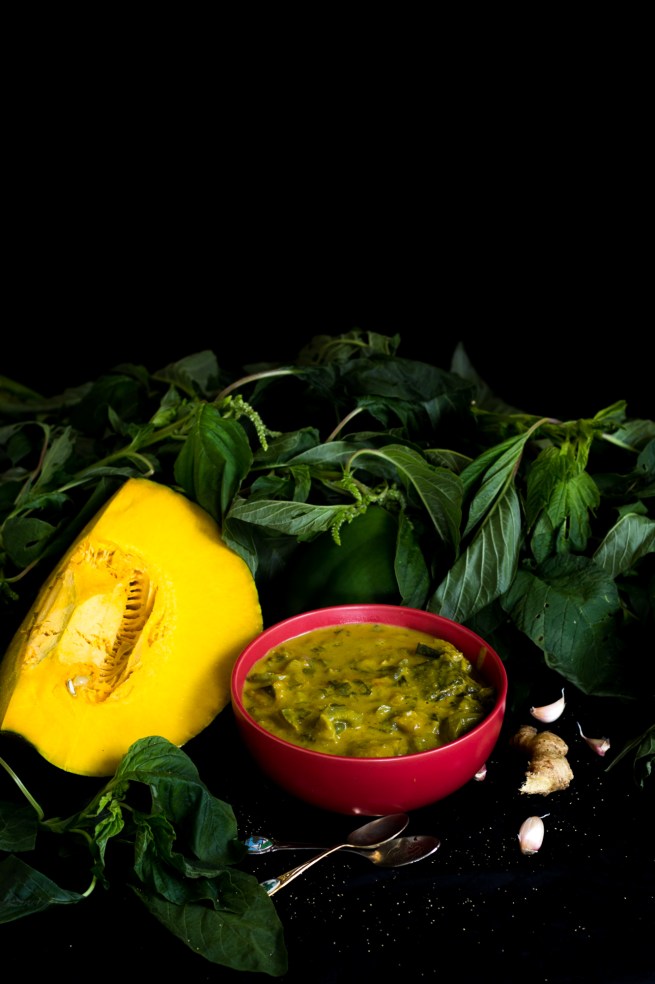
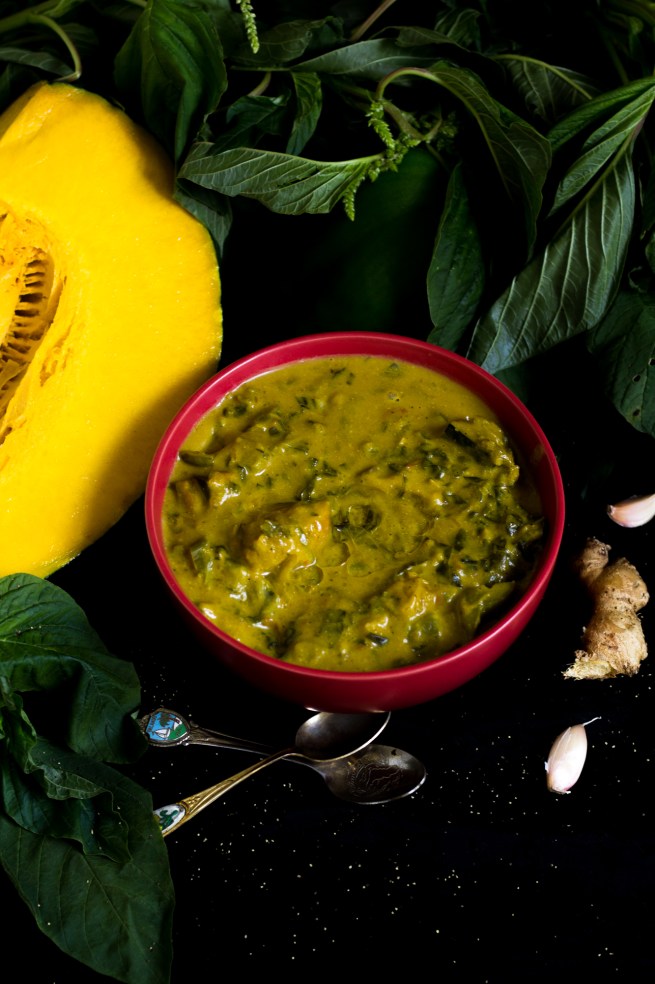
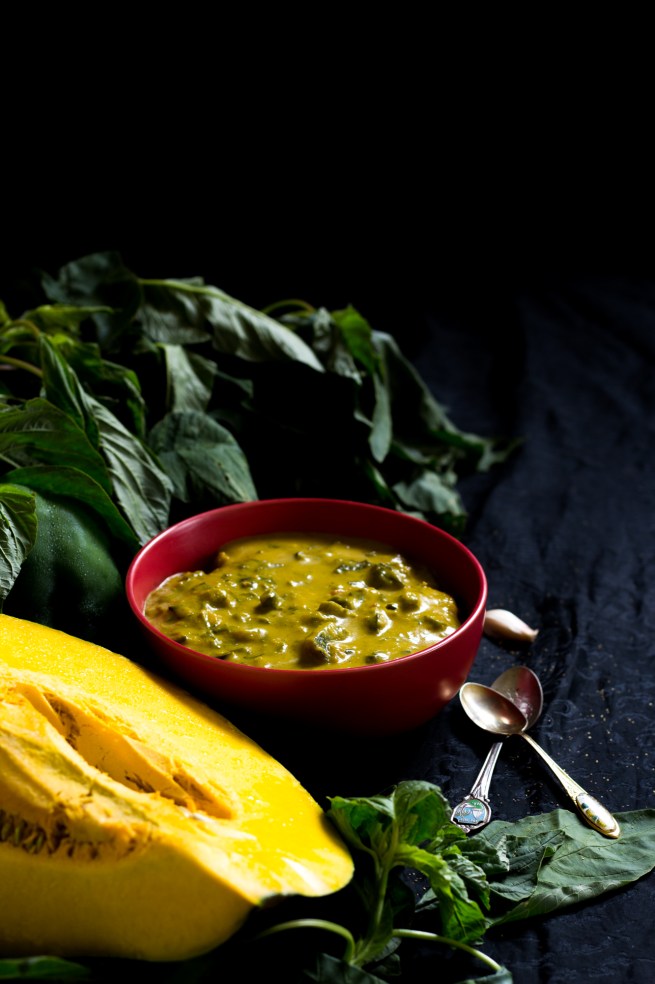
Surprisingly I was making this exact soup while listening to the podcast and it was  just the right timing. This soup is completely vegetarian, vegan even (depending on who is reading this). And I didn’t set out to make it vegetarian by intention. It is food like this that you will find me eating and making for my family because it is relatively easier and “cheaper” to access than let’s say a steak, a pizza, take out etc.

This stew is rich, savory aromatic and hearty with a spicy kick from the chili oil. It is ideal for these rainy moody last days of the year. I think I have made it four times in a row in the past few weeks.  You wont even realize that it is loaded with a lot of dodo/ callaloo!


What you will need:

4 C. Pumpkin, cut in chunks

2 C. Amaranth greens/ Dodo/ Callaloo. coarsely chopped

1/2 C. Coconut milk

1 Large Onion, chopped

3 Garlic cloves, minced

1 Tsp. Ginger, minced

2 Tbsp. Soy sauce

Salt

Black pepper

chili oil (Optional)

1 Tbsp.  Oil

2 C. Water


Observation.

  1. If you cannot access coconut milk, substitute it with groundnut paste or peanut butter. The taste will be a little different though but still very flavorful and rich.
  2. The two cups of water will be used to make the soup. You can substitute the water with vegetable or chicken stock.
  3. Depending on the consistency you desire, you may need more or less water/stock. Keep in mind that as the stew simmers, the pumpkin will continue to disintegrate causing the stew to thicken.


Method

  1. Place the pan on high heat. Add the oil.
  2. Add the garlic and ginger and fry till an aroma is released. Add the onion and cook till translucent.
  3. Next add the pumpkin chunks and mix till they are well coated with the aromatic garlic, ginger and onion.
  4. Add a quarter cup of water and cover the pan. Let the pumpkin cook for about 10 minutes or until slightly cooked through.
  5. Once the 10 minutes are over, remove the cover from the pan and add the amaranth greens/dodo/callaloo, chili oil, soy sauce, salt and black pepper. Mix well.
  6. Add the coconut milk and mix well. Finally add the rest of the water.
  7. Reduce the fire and let the stew simmer on low heat for 20-25 minutes.
  8. Remove from fire once a thick bubbling stew is formed.
  9. Serve hot with your favorite carbohydrates (posho, rice, yams, potato etc)

Please if you have time go listen to the episode and come back  so we can have a conversation. What do you think about dieting in Uganda or Sub-Saharan Africa as a whole?